5 Tips for Post-Cyclone Tree Recovery

Cyclones like the recent Cyclone Alfred can cause significant damage to trees, creating hazards around homes and streets across South East Queensland. After a cyclone passes, taking prompt, careful steps can greatly reduce safety risks and support tree recovery. Here are five practical actions to take after a cyclone to manage tree damage effectively and safely.

Your Safety Always Comes First

Immediately after a cyclone, safety should always be your top priority. Fallen power lines, damaged branches, and leaning or uprooted trees pose serious hazards. Do not approach these areas until professionals have assessed the safety of your property. Ensure that electricity is disconnected if power lines are involved, and contact emergency services or qualified arborists to safely handle dangerous situations.

Assess Tree Damage Carefully

After ensuring your property is safe to inspect, carefully evaluate the extent of the tree damage caused by Cyclone Alfred. A thorough check will help you understand the full scope of damage and identify potential hazards quickly.

Be on the lookout for common signs of cyclone damage, such as broken or split branches, leaning trunks, partially uprooted trees, and areas where the soil has lifted or roots are exposed. Take note of any large branches that may be hanging precariously, as these can pose immediate dangers.

While minor damage might seem harmless initially, internal structural weaknesses aren’t always visible. Trees that appear stable on the surface might have hidden root damage or internal fractures, putting them at risk of future failure. If you’re uncertain about the stability of your trees, it’s best to have a professional arborist conduct a detailed inspection.

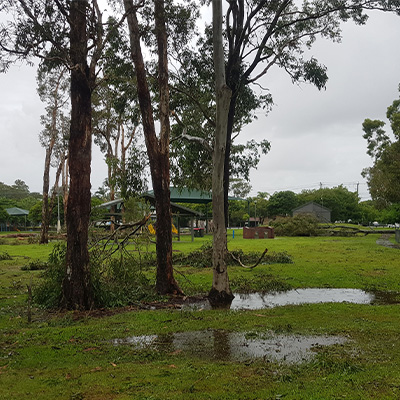
Post-Cyclone Tree Recovery

Conduct Corrective Pruning

Prompt pruning after cyclone damage is critical. Remove broken, hanging, or severely damaged branches with clean cuts close to the branch collar. This promotes faster natural healing and prevents decay from spreading into healthy parts of the tree. Avoid aggressive pruning that removes excessive foliage, as it can further stress the tree.

Stabilise or Remove Damaged Trees

Trees significantly leaning or uprooted often require professional evaluation. Smaller trees can sometimes be stabilised with temporary supports to help them recover. However, large trees or those severely compromised by root damage typically need professional removal to ensure safety. Never attempt major removals yourself—always rely on professional arborists equipped to manage complex tree removal safely.

Post-Cyclone Tree Recovery

Schedule a Professional Tree Inspection

After a cyclone, it’s wise to schedule a professional tree inspection, even if your trees seem mostly intact. Arborists have the training to detect hidden structural damage, weakened limbs, or root issues that might become serious hazards later. An inspection provides peace of mind and helps ensure the ongoing health of your trees and safety of your property.

Protect Your Trees After Cyclone Alfred

The aftermath of Cyclone Alfred presents unique challenges, but taking immediate, proactive steps can greatly aid tree recovery and property safety. If you’re unsure about how to manage damaged trees or require professional assistance, contact O’Brien’s Tree Care for prompt, reliable service. Let our arborists ensure your trees and property recover safely and effectively. You can get in touch with O’Brien’s Tree Care by calling 0431 740 088 or clicking here.