When a Damaged Tree Can Wait vs Immediate Removal

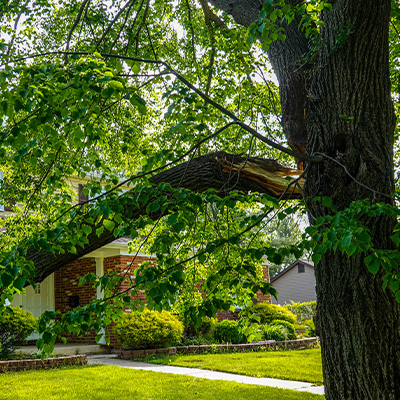
After storms, vehicle impact, or sudden branch failure, it’s common to assume the tree must come down immediately. Visible damage can look severe even when the structure remains stable. Acting too quickly can sometimes remove a tree that could have been safely managed.
A damaged tree removal decision is based on structural impact rather than appearance alone. Some trees remain secure despite broken limbs or bark tearing, while others become unstable even when the canopy still looks intact. The level of risk depends on what has changed within the support system of the tree.
Types of Tree Damage That Appear Severe but May Be Stable

Not all visible damage means the tree is at immediate risk of failure. Some injuries look dramatic but affect non-structural areas of the canopy or outer bark. These situations often allow time for assessment before deciding on removal.

  • Loss of smaller limbs or outer canopy branches can make a tree look unbalanced, yet the main stem and structural framework may remain intact.
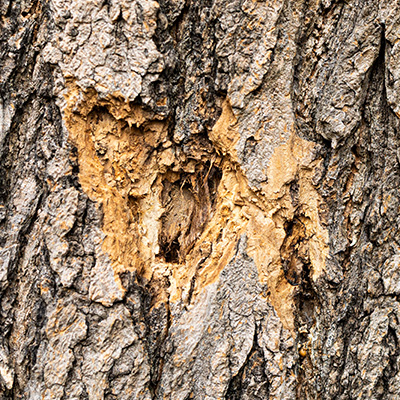
  • Surface bark tearing may appear severe but does not always extend deep enough to compromise the trunk’s strength.
  • A lean that has not increased after a storm may reflect pre-existing growth direction rather than new instability.
  • Partial canopy thinning can occur after wind stress without indicating root failure.
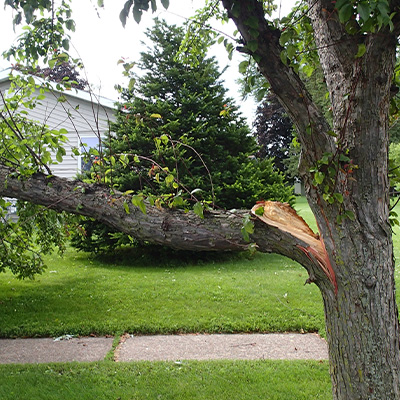
  • Split secondary branches may be removable without affecting the main structure of the tree.

When damage is limited to non-load-bearing areas, the tree may remain stable while corrective pruning or monitoring is considered.

Damaged Tree Can Wait vs Immediate Removal

Signs a Damaged Tree May Require Immediate Removal

Some forms of damage directly affect the structural integrity of the tree and increase the likelihood of failure. In these cases, waiting can raise the level of risk, particularly near homes, driveways, or public areas. The concern shifts from appearance to stability.

Major splitting through the main trunk or a primary stem can indicate compromised load-bearing capacity. When cracks extend deeply or run vertically through structural wood, the tree may no longer distribute weight safely. Movement at the base after the damage occurred is another serious indicator.

Root plate lifting or visible soil heave around the trunk suggests anchoring failure. If the tree shifts during wind or heavy rain, or if large sections are partially detached and suspended, the situation may require prompt action. Damage that places heavy limbs over occupied structures also increases urgency.

Situations Where Temporary Stabilisation Is Possible

Not every damaged tree needs to be removed immediately. In some cases, the structure remains largely intact and corrective measures can reduce risk while a longer-term decision is made. The suitability of stabilisation depends on how much of the support system has been affected.

  • Broken secondary limbs can often be removed to reduce canopy weight without compromising the main trunk.
  • Partial branch splits may be addressed through targeted pruning to eliminate weak leverage points.
  • Uneven canopy loss can sometimes be balanced with corrective reduction to improve load distribution.
  • Minor lean without root movement may be monitored if anchoring remains stable.
  • Limited storm damage in otherwise healthy trees may allow staged management rather than immediate removal.

Temporary stabilisation is appropriate only when the core structure remains sound. Ongoing monitoring ensures that delayed instability does not develop after initial repairs.

Damaged Tree Can Wait vs Immediate Removal

Why Some Damage Worsens Weeks Later

Tree damage does not always reveal its full impact immediately. Internal fibres may be strained or partially fractured without causing instant movement. As the tree continues to carry its normal load, weakened areas can gradually separate or fail.

Changes in soil moisture after heavy rain can also expose instability that was not obvious at first. Roots that were loosened during a storm may shift further once the ground softens. In some cases, canopy decline or additional cracking appears weeks later as structural stress redistributes through the tree.

Safety Considerations Around Damaged Trees

Even when removal is not immediately required, damaged trees should be treated cautiously. Structural weaknesses are not always visible, and movement can occur unexpectedly, particularly during wind or heavy rain. Keeping distance reduces the risk of injury while a proper assessment is arranged.

  • Avoid standing beneath split stems or hanging limbs, as these may fail without further warning.
  • Do not attempt to cut partially detached branches, especially if they are under tension or resting on structures.
  • Keep vehicles and foot traffic clear of trees that show lean or root movement.
  • Limit access after heavy rainfall, as softened soil can increase instability.
  • Monitor for changes in alignment or new cracking, particularly in the days following the initial damage.

Taking precautionary measures helps reduce immediate risk while determining whether removal or corrective work is appropriate.

Damaged Tree Can Wait vs Immediate Removal

Unsure Whether a Damaged Tree Is Urgent?

If a tree on your property has been affected by wind, impact, or sudden branch failure, the level of risk is not always obvious from appearance alone. A structured assessment can determine whether removal is required immediately or whether stabilisation and monitoring are appropriate. To arrange advice or an onsite inspection, contact O’Brien’s Tree Care on 07 5497 3116 or get in touch with us online.

FAQ: Does a Tree Need Removal?

Not necessarily. Some splits affect secondary branches and can be corrected through pruning. Structural splits through the main trunk or primary stems are more likely to require removal.

If the root system remains stable and the lean has not increased, monitoring may be possible. Root plate movement or soil lifting usually indicates a higher level of concern.

Inspection is recommended as soon as practical after significant damage, particularly if the tree is near structures or access areas. Early assessment helps determine urgency.

Insurance requirements vary depending on policy terms and the level of risk. Documentation from a professional assessment may assist with claim decisions.

Pruning can reduce risk when damage is limited to non-structural limbs. If anchoring or primary stems are compromised, pruning alone may not restore stability.

Damaged branches may be under tension and can move unpredictably. Attempting removal without proper equipment increases the risk of injury.