Mushrooms Growing Near Tree Roots: Should You Be Concerned?

Mushrooms can appear around the base of a tree almost overnight, especially after rain or humid weather. One day the ground looks clear, and the next small caps are pushing through the soil or mulch. Because they form so quickly and close to the trunk, they often raise immediate concern about the tree’s safety.

Mushrooms growing near tree roots are not always a sign of danger, but they do indicate fungal activity beneath the surface. In some cases they are simply feeding on organic matter in the soil, while in others they may be connected to decaying roots. The appearance alone doesn’t confirm a problem, which is why context matters.
What Mushrooms Around a Tree Actually Mean

The mushrooms visible above the ground are only the fruiting bodies of a much larger fungal network living in the soil. Most of the organism exists underground, spreading through organic matter such as mulch, buried roots, or decaying wood. Their sudden appearance often follows rainfall because moisture triggers the fungus to produce these temporary structures.

This means the mushrooms themselves are not attacking the tree in the way many people expect. Instead, they signal that decomposition is occurring nearby. Sometimes that material is harmless debris in the soil, while in other situations it may involve roots that are no longer functioning. Interpreting their presence depends on what the fungus is feeding on rather than the mushrooms alone.

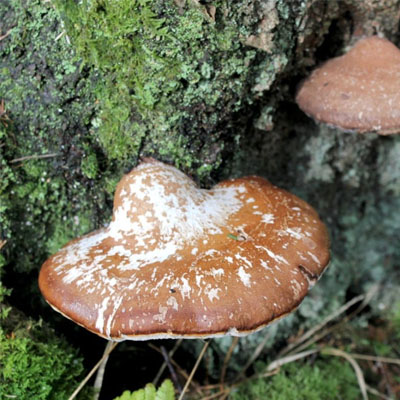
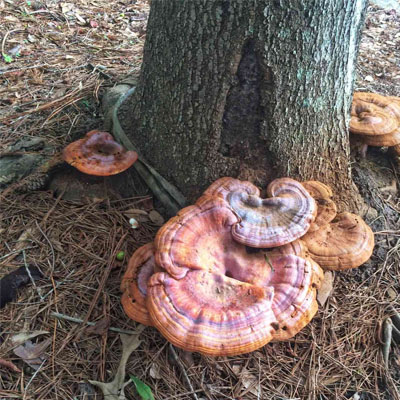
Fungi appearing at the base of a mature tree trunk

Situations Where Fungi Are Harmless

Not every appearance of mushrooms near a tree indicates a problem. In many cases, the fungus is feeding on organic material in the soil rather than living roots. Understanding these harmless situations helps avoid unnecessary concern when fruiting bodies appear after wet weather.

  • Decomposing mulch or garden beds often support fungal growth. Mushrooms commonly form where bark chips or organic matter are breaking down.
  • Old buried roots or stumps beneath the soil can host fungi for years after previous plant removal. The nearby tree may be completely unaffected.
  • Rich organic soil naturally contains fungal networks that assist decomposition and nutrient cycling. Fruiting bodies may appear seasonally without harming the tree.
  • Isolated, short-lived growth that disappears within days is often tied to moisture conditions rather than structural decay.
  • Growth located away from the trunk usually indicates the fungus is feeding on material in the surrounding soil rather than structural roots.
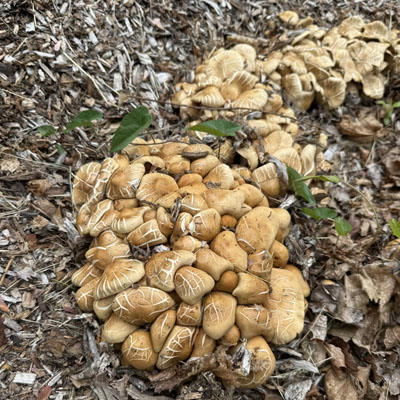
Fungi growing in mulch around tree roots

When these conditions apply and the tree shows no other changes, the mushrooms are typically part of normal soil biology rather than a sign of decline.

When Mushrooms Can Indicate Root Decay

In some cases, fungal growth near a tree signals that the organism is feeding on structural roots rather than harmless organic debris. Certain fungi break down the wood that supports the tree, gradually reducing strength below ground while the canopy still appears normal. Because this process occurs out of sight, the first visible clue is often the appearance of mushrooms close to the trunk.

When decay affects load-bearing roots, the tree’s stability can be compromised over time. The change is rarely immediate, but repeated fruiting near the base suggests the fungus is established within the root system. This is why location and recurrence matter more than the mushrooms themselves when judging potential risk.

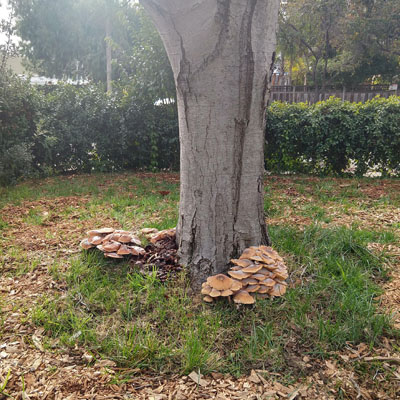
Cluster of mushrooms forming around exposed tree roots

Warning Signs That Increase Concern

Mushrooms alone don’t confirm a serious issue, but certain accompanying changes can suggest the fungus is affecting important roots. These signs help distinguish normal soil activity from potential structural decline. Looking for patterns around the tree provides better context than judging the mushrooms in isolation.

  • Repeated fruiting in the same location, especially close to the trunk, can indicate an established fungal presence below ground.
  • Soft or spongy ground near the base may suggest decaying roots losing strength in the surrounding soil.
  • New or increasing lean developing over time can reflect reduced anchoring support.
  • Thinning canopy or reduced leaf size may show the tree is struggling to move water and nutrients effectively.
  • Cracks forming in soil around the base can appear as roots deteriorate and ground structure changes.
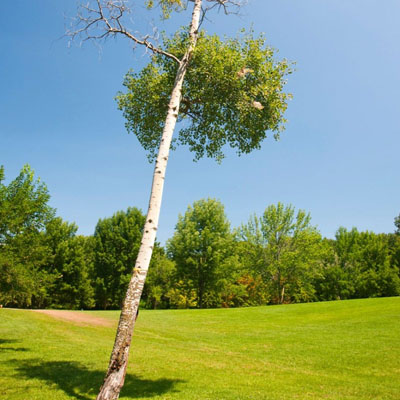
Leaning tree showing possible root instability near mushroom growth

When several of these signs appear together, the likelihood of root decay increases and the tree may require closer assessment.

Why Trees Can Look Healthy Despite Root Problems

Trees can continue to look normal even while decay develops below ground. Stored energy within the trunk and branches allows the canopy to function for some time after roots begin to deteriorate. Because of this reserve, visible decline often lags behind the actual structural change.

As decay progresses, the remaining healthy roots compensate for those that have been affected. This balance can hold for months or even years before noticeable changes appear above ground. By the time symptoms such as thinning foliage or dieback develop, the root system may already be significantly weakened.

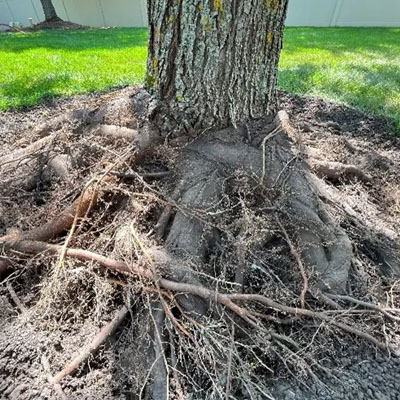
Damaged tree roots exposed above soil surface near base of trunk

What to Do After Finding Mushrooms Near a Tree

Finding mushrooms near a tree doesn’t require immediate action, but it does warrant observation. The goal is to understand whether the fungi are part of normal soil activity or connected to structural roots. A measured response helps avoid unnecessary disturbance while still addressing potential risk.

  • Avoid removing soil around the base in an attempt to expose roots. Disturbing the area can damage healthy roots and worsen stability.
  • Note the location and recurrence of the mushrooms. Reappearance in the same spot, especially near the trunk, provides useful information over time.
  • Check for surrounding changes such as lean, canopy thinning, or soft ground. These patterns help determine whether further attention is needed.
  • Do not rely on removing the mushrooms alone. The visible caps are temporary and removing them does not affect the fungus underground.
  • Seek assessment if multiple warning signs appear or the tree is near structures or access areas.
Mushrooms Growing Near Tree Roots: Should You Be Concerned?

Monitoring the situation over several weeks often clarifies whether the fungi are seasonal or linked to root decline. If you have doubts or concerns regarding your new fungi friends, play it safe and contact a qualified arborist to find out for sure what the cause is.

Concerned About Mushrooms Near Your Tree?

If mushrooms are appearing near the base of a tree and you’re unsure what they indicate, an assessment can clarify whether they relate to normal soil activity or root decline. Identifying the cause early helps guide safe management decisions. To arrange advice or an onsite inspection, call O’Brien’s Tree Care on 07 5497 3116 or contact us online.

FAQ: Mushrooms Growing Near Tree Roots

Not always. Many fungi grow on organic matter in the soil and have no impact on the tree itself. The location and repetition of growth are more important than the mushrooms alone.

You can remove them for appearance, but it won’t stop them returning. The visible caps are temporary and the main fungus remains underground.

Only certain fungi that decay structural roots can affect stability. This usually occurs gradually and is accompanied by other warning signs such as lean or soil changes.

Some species can be toxic if eaten, so they shouldn’t be handled or consumed. Their presence alone does not make the tree unsafe.

They often disappear as conditions dry, but may return during similar weather. Recurring growth in the same location may indicate an ongoing source underground.

Assessment is recommended if growth repeats near the trunk, appears with canopy decline, or the tree is close to structures or walkways.