Overextended Branches: Why Heavy Limbs Fail Under Wind Load

Strong winds place enormous pressure on tree branches, particularly those that extend well beyond the main structure of the canopy. Many of these limbs appear stable in calm conditions, holding their position year after year without obvious change. When wind load increases suddenly, however, that hidden stress can reach a tipping point.

Overextended branches develop gradually as trees grow outward in search of light, often adding length and weight faster than the supporting wood can strengthen. The result is a limb that looks healthy on the surface but carries increasing strain at its attachment point. Under strong winds, this imbalance can lead to sudden failure with little visible warning beforehand.
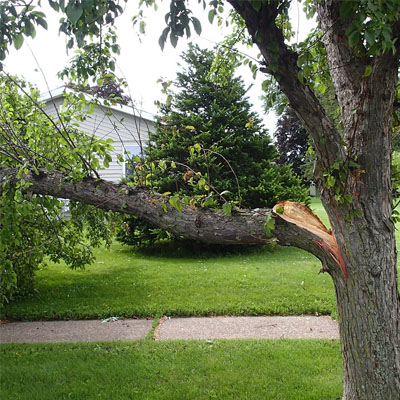
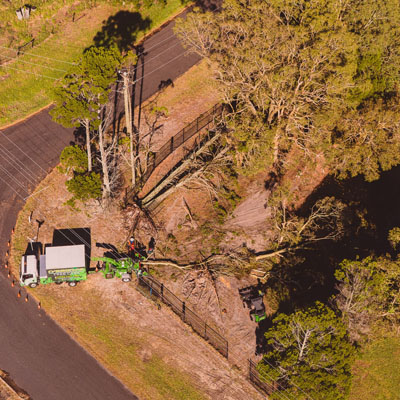
When Branch Length Turns Into Structural Load

As a branch grows longer, its weight increases at a faster rate than its supporting structure can adapt to. Each additional metre adds leverage, placing greater strain on the branch union and the supporting wood closer to the trunk. This gradual shift often goes unnoticed because the branch continues to look healthy and stable under normal conditions.

Over time, the balance between growth and strength can move out of alignment. The wood fibres at the attachment point are forced to carry increasing load, especially when the branch holds dense foliage or seasonal growth. Once wind is added to this equation, that stored stress can exceed the branch’s capacity, setting the stage for sudden failure.

Overextended Branches: Why Heavy Limbs Fail Under Wind Load

Why Wind Load Pushes Overextended Branches Past Their Limit

Wind doesn’t just add pressure to a branch, it changes how weight and force are applied across the entire structure. Overextended limbs are already carrying stored stress, and wind introduces movement that magnifies that load. This combination is what turns a stable-looking branch into a sudden failure risk.

  • Wind multiplies effective weight by pushing against leaves and smaller branchlets, increasing the load far beyond the branch’s static weight. This added force concentrates stress at the attachment point.
  • Repeated movement causes fatigue as the branch sways back and forth. Each oscillation weakens internal wood fibres, even when no external damage is visible.
  • Shifting wind direction changes where pressure is applied, stressing fibres that are not designed to carry load from those angles. This uneven loading accelerates failure.
  • Vibration through the canopy transfers force between connected limbs. Overextended branches absorb more of this energy, increasing strain where they meet the main structure.
  • Failure often occurs away from visible defects, making the break seem sudden. The weakest point may be inside the wood rather than on the surface.
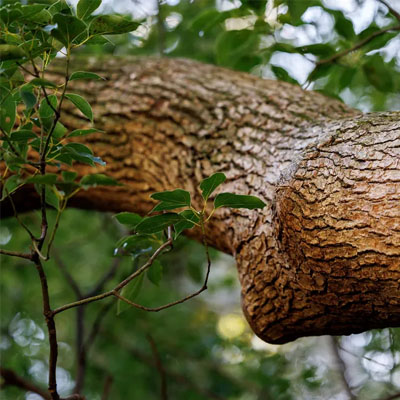
Why overextended tree branches are more likely to fail in wind

Once wind load pushes stress beyond the branch’s capacity, failure can occur quickly and without obvious warning. This is why wind acts as the trigger rather than the root cause of most heavy limb failures.

Why Many Heavy Limbs Show No Obvious Warning Signs

Heavy limbs can carry significant internal stress long before any surface changes appear. The outer bark and foliage often remain healthy even as wood fibres inside the branch are being pushed close to their limit. This hidden strain makes it difficult for homeowners to recognise a problem before failure occurs.

As branches extend and carry more weight, stress concentrates at the attachment point where fibres are repeatedly loaded and unloaded during wind movement. Small internal cracks can form and grow without affecting the branch’s appearance. By the time visible signs such as splitting or sagging appear, the branch may already be close to failing.

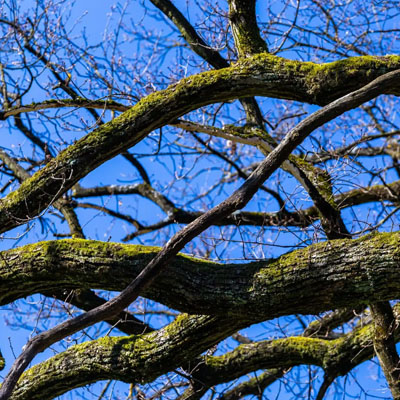
How wind load causes failure in long, overextended tree limbs

Common Tree Types and Situations Prone to Overextension

Overextension tends to develop where growth patterns or site conditions encourage branches to lengthen without proportional structural support. Certain tree forms and situations make this more likely, particularly in areas exposed to wind. Recognising these patterns helps identify limbs that may be carrying hidden risk.

  • Trees with long lateral branches that extend well beyond the main canopy often accumulate leverage faster than strength. These limbs can look balanced until wind load exposes the strain.
  • Unbalanced canopies caused by uneven light or past removals encourage growth in one direction. Over time, weight concentrates on fewer attachment points.
  • Previous pruning mistakes can leave limbs extended without adequate taper or secondary support. Fast regrowth after reduction can add weight quickly to already stressed unions.
  • Open, exposed sites increase wind impact on extended limbs. Trees that once grew in sheltered conditions may become vulnerable after surrounding vegetation is removed.
  • Trees near structures or clearings often reach outward for light, creating heavy limbs that overhang roofs, fences, or driveways.
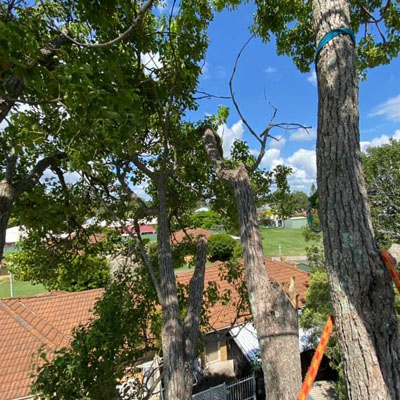
Heavy tree limbs failing due to wind load and leverage

These situations don’t guarantee failure, but they raise the likelihood that wind will test a branch’s limits. Identifying overextension early allows risk to be reduced before storms provide that test.

How Structural Pruning Reduces the Risk of Limb Failure

Structural pruning focuses on correcting load distribution rather than simply removing growth. By selectively shortening overextended limbs, the leverage acting on the branch union is reduced, easing stress where failures are most likely to occur. This approach supports the tree’s natural structure while lowering the forces applied during strong winds.

Reducing length and weight also encourages better taper and secondary branching, allowing loads to be shared more evenly across the canopy. Over time, this improves overall balance and resilience without compromising tree health. When done early, structural pruning is one of the most effective ways to prevent heavy limb failure before storms expose existing weaknesses.

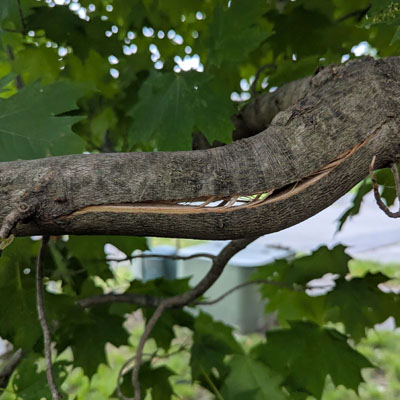
Understanding wind load effects on overextended tree branches

When Wind Damage Signals a Bigger Structural Issue

When a heavy limb fails during strong winds, it is often a sign that the problem extends beyond a single branch. Wind damage can reveal underlying imbalance or loading issues elsewhere in the canopy. Looking beyond the immediate break helps prevent repeat failures.

  • One limb failing can indicate others are close to the same limit. Similar branch length, angle, or weight distribution elsewhere in the tree may be carrying comparable stress.
  • Repeated failures in the same area suggest ongoing imbalance. If limbs continue to fail on one side, canopy weight is likely uneven and needs correction.
  • Breaks near major unions point to structural overload. These failures often reflect long-term stress rather than a one-off wind event.
  • Fresh failures following earlier storm damage can signal fatigue. Branches weakened by prior movement may give way under lower wind speeds later on.
  • Damage near structures increases risk exposure. Overhanging limbs that fail once are more likely to fail again if the underlying structure is not addressed.
Structural reasons overextended branches fail during strong winds

Wind damage should be treated as information, not just an isolated incident. Assessing the broader structure helps reduce the chance of further failures as conditions remain windy through the season.

Concerned About Heavy Limbs on Your Trees?

If your trees have large branches extending well beyond the main canopy, strong winds can expose hidden structural stress without warning. Early assessment helps identify overextended limbs before they reach a failure point. To discuss preventative pruning or arrange an onsite inspection, contact O’Brien’s Tree Care on 07 5497 3116 or info@obrienstreecare.com.au.

FAQ: Heavy Limb Failure Under Wind Load

Not always, but they are far more likely to fail when exposed to strong or repeated wind. Overextension increases leverage and stress at the branch union, making failure more likely under load. The absence of visible defects often makes the risk easy to overlook.

Yes. Many overextended branches show no external signs of weakness before failure. Internal fibre stress and fatigue can build up over time without affecting foliage or bark appearance.

Wind is usually the trigger rather than the cause. The underlying issue is often long-term structural imbalance from excessive length and weight. Wind simply applies the force that pushes the branch past its limit.

Structural pruning can significantly reduce risk by shortening lever arms and improving load distribution. When carried out early, it allows the tree to maintain strength while reducing stress during high winds. It is most effective as a preventative measure rather than a reaction after failure.

Trees with fast growth, long lateral limbs, or unbalanced canopies are more likely to develop overextension. Site conditions such as open exposure or recent vegetation removal can also increase risk. Each tree should be assessed based on its structure rather than species alone.

Assessment is recommended when branches extend well beyond the canopy, overhang structures, or have been moving heavily in wind. Post-storm inspections are also useful, as wind damage can reveal underlying structural issues that were not obvious before.