Trees Growing Too Close to Homes: Risks and Management Options

Many trees planted near homes begin as small, well-positioned features that pose no immediate concern. Over time, steady growth can bring branches, roots, and canopies closer to buildings, often without being noticed. What once seemed like a safe distance can gradually become a point of interaction between the tree and the structure.

Trees growing close to houses may affect roofs, drainage, soil stability, and access around the property as they mature. These changes rarely happen suddenly, which is why potential risks are often overlooked until damage or maintenance issues appear. Early awareness helps balance property protection with long-term tree health.
When Proximity Becomes a Structural Risk

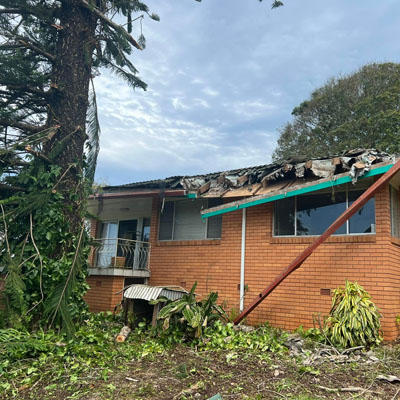
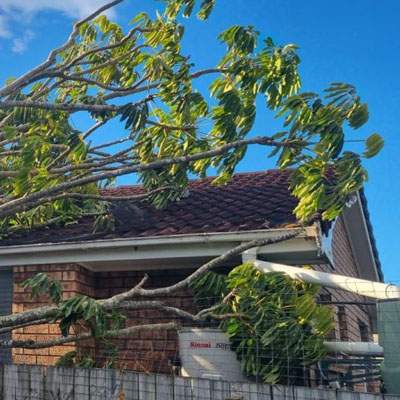
As trees mature, their physical presence around a building can begin to influence how the structure is exposed to weather and movement. Branches that once cleared roofs and walls may start brushing against surfaces during strong winds. Over time, repeated contact can contribute to wear, moisture retention, and surface damage.

Roots and canopy growth can also alter how water moves through the soil near foundations. Dense root systems may change moisture patterns, while heavy canopies can shade areas that remain damp for longer periods. When these factors combine, the relationship between the tree and the building shifts from neutral to potentially problematic.

Professional tree pruning to protect home structures

Common Risks of Trees Growing Close to Buildings

Trees positioned near structures can create several ongoing maintenance and structural challenges as they grow. These issues often develop slowly, which makes them easy to overlook until they become persistent problems.

  • Branch contact with roofs and walls can wear down roofing materials and external surfaces over time. Repeated movement during wind increases the risk of damage and moisture entry.
  • Gutter and drainage blockage occurs when leaves, twigs, and debris accumulate near rooflines. Blocked gutters can lead to overflow, staining, and water pooling around foundations.
  • Increased wind load near structures can place pressure on both the tree and nearby building elements. Heavy limbs positioned over roofs become higher-risk during storms.
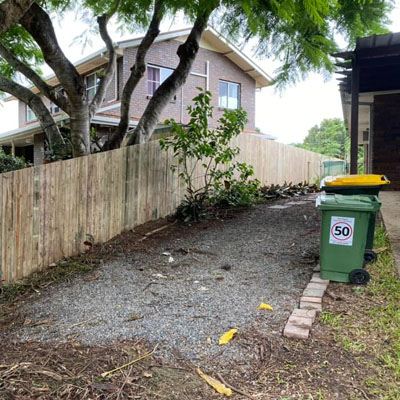
  • Root interaction with paving and pathways may cause lifting or cracking as roots expand. This can affect access areas and increase trip hazards.
  • Moisture retention around walls and roofs develops when dense foliage limits airflow and sunlight. Damp surfaces are more prone to staining and material deterioration.
  • Restricted access for maintenance and repairs can occur when trees grow too close to building features. This makes routine inspections and repairs more difficult and costly.
Overhanging tree branches posing risk to roof and gutters

When several of these risks appear together, the interaction between the tree and the building often requires closer assessment.

How Roots and Foundations Interact Over Time

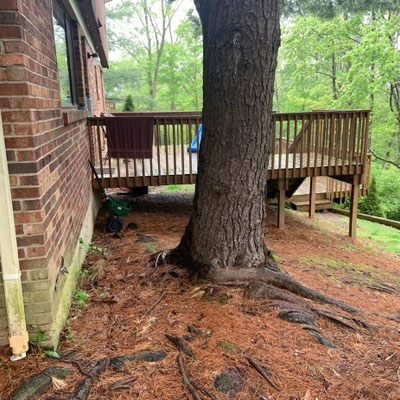
Tree roots and building foundations often influence each other indirectly rather than through direct physical contact. In most cases, roots do not break through solid concrete, but they do respond to changes in soil moisture and available space around structures. As roots grow and expand, they can alter how water is distributed beneath and beside foundations.

Over time, these changes in moisture levels may contribute to soil movement, particularly in reactive or clay-rich soils. When soil repeatedly expands and contracts, small shifts can occur beneath paving, paths, and sometimes parts of the building itself. This gradual process is why root-related issues often develop slowly and are linked to long-term growth patterns rather than sudden damage.

Tree roots affecting soil and foundations near home

Safe Management Options That Protect Both Tree and Property

Managing trees close to buildings is most effective when the focus is on long-term stability rather than short-term fixes. Thoughtful adjustments can reduce risk while preserving the health and appearance of the tree. The goal is to balance growth with structural safety.

Structural pruning is often used to reduce branch length and weight near buildings without compromising canopy balance. Selective removal and shortening of targeted limbs helps redirect growth away from roofs and walls. When combined with proper timing and technique, this approach supports recovery and ongoing stability.

Soil management can also play a role in reducing pressure around foundations and paved areas. Improving drainage, limiting compaction, and maintaining healthy soil structure helps regulate root behaviour and moisture movement. These measures support both the tree’s root system and the surrounding built environment.

Damage to roof caused by overhanging tree branches

When Proximity Indicates a Higher Risk Category

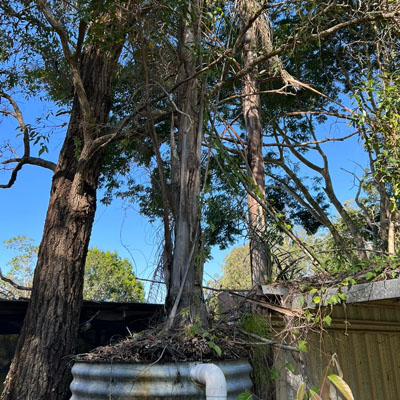
In some situations, a tree’s position relative to a building places it in a higher-risk category regardless of routine maintenance. These cases require closer monitoring and, in some instances, more active management. Recognising these higher-risk indicators helps guide timely decision-making.

  • A noticeable lean toward the structure that has developed over time. This shifts weight closer to the building and increases pressure during strong winds.
  • Heavy limbs positioned directly over roofs or living areas. Failure in these locations carries greater safety and property risks.
  • Previous branch or stem failures near the building. Past breakage often signals underlying structural imbalance.
  • Restricted root zones caused by paving, retaining walls, or construction. Limited space can weaken anchoring and increase instability.
  • High exposure to prevailing winds in open or elevated sites. Trees in these positions experience greater loading near structures.
Trees overhanging roof creating ongoing maintenance risk

When these factors are present, standard maintenance may no longer be sufficient on its own. A more detailed tree assessment by a qualified arborist helps determine whether additional pruning, monitoring, or staged management is required.

Concerned About Trees Near Your Home?

If trees on your property are growing close to roofs, walls, or foundations, early assessment helps reduce long-term risk and maintenance issues. Practical management can often improve safety without unnecessary removal. To arrange advice or an onsite inspection, contact O’Brien’s Tree Care on 07 5497 3116 or info@obrienstreecare.com.au.

FAQ: Trees Growing Too Close to Homes

There is no single distance that applies to every situation, as species, soil type, and building design all play a role. A tree that poses no issue in one setting may create problems in another. Assessment focuses on structure, growth direction, and site conditions rather than distance alone.

Roots rarely break through solid foundations, but they can influence soil moisture and movement around buildings. In reactive soils, this can contribute to gradual shifting beneath paving and footings. These effects usually develop over long periods rather than suddenly.

In many cases, structural pruning can reduce risk by managing branch length and directing growth away from buildings. When done correctly, it preserves tree health while improving clearance. Some situations may still require ongoing monitoring.

No. Many trees can be safely managed with appropriate pruning and soil care. Removal is usually considered only when structural risk cannot be reduced to an acceptable level through other methods.

Trees growing close to structures should be reviewed regularly, especially after major weather events or noticeable growth changes. Periodic assessment helps identify developing issues before they escalate.

Yes. Local regulations and vegetation protection rules may apply depending on location and species. Professional advice helps ensure any work complies with relevant requirements.