Holes in Tree Leaves: Pests, Disease or Weather Damage?

Holes, ragged edges, or missing sections in tree leaves can appear suddenly and make an otherwise healthy canopy look damaged. In some cases, only a handful of leaves are affected, while in others the pattern spreads across new growth or one side of the tree. The shape and location of the damage often provide the first clue about what has caused it.

Holes in tree leaves can result from chewing insects, damaged tissue falling away, hail, wind, or branches rubbing together. The cause is not always obvious from a quick glance, especially when pests are no longer present or the damage developed after a weather event. Looking at the pattern across the canopy gives a clearer indication of whether the issue is isolated or continuing.
The Pattern of Leaf Damage Provides the First Clue

The shape of the damage often helps narrow down what has happened before any pest or disease is identified. Irregular holes and chewed edges usually point to feeding insects, while small rounded holes can form when damaged tissue dries and drops away. Torn or shredded sections are more often linked to hail, wind, or physical contact between branches.

The location of the damage matters as well. Holes concentrated on new growth may suggest active feeding, while damage limited to one side of the canopy can reflect exposure to weather or nearby surfaces. A scattered pattern across older leaves may be less concerning than fresh damage continuing to appear through new foliage.

Common Pests That Leave Holes in Tree Leaves

Chewing pests damage leaves by removing sections of tissue as they feed. The extent of the damage depends on the insect, how long it has been active, and whether it is targeting mature foliage or softer new growth. In many cases, the pest itself may be hidden beneath leaves or no longer present by the time the holes are noticed.

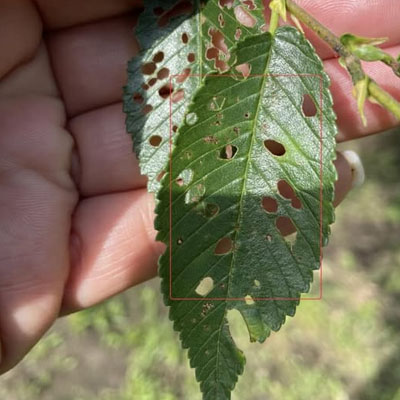
  • Caterpillars can leave irregular holes, stripped edges, or large missing sections across individual leaves. Heavy feeding often affects groups of leaves in the same part of the canopy.
  • Beetles may create rounded holes or chew through leaf margins. Some species feed at night, which can make the damage appear without an obvious culprit during the day.
  • Sawfly larvae often feed in groups and can remove large amounts of leaf tissue within a short period. Their activity may leave only the veins or thin sections of the leaf behind.
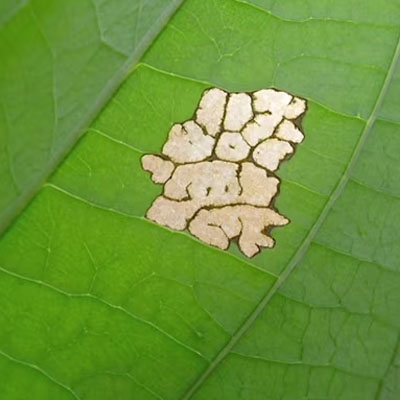
  • Leaf miners feed within the leaf rather than chewing directly through the surface. As damaged tissue dries and breaks away, small holes or transparent patches can develop.
  • Other chewing insects may target only soft new growth, leaving young leaves distorted or incomplete as they expand.
Holes in Tree Leaves: Pests, Disease or Weather Damage - Insect damage to leaf

Pest damage is more concerning when fresh holes keep appearing or large areas of new growth are being affected. A few damaged leaves may have little impact, but repeated feeding can reduce canopy vigour over time.

When Disease Creates Holes Without Insects

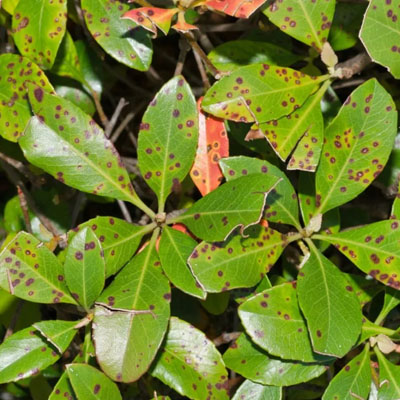
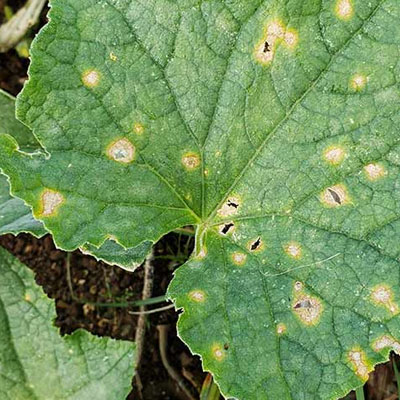
Some leaf diseases begin as spots rather than open holes. The affected tissue darkens, dries, and eventually falls away, leaving small gaps that can look like insect feeding. This pattern is often described as a shot-hole effect because the missing sections tend to appear more rounded and evenly spaced.

The main difference is that the damage usually starts with visible spotting or discolouration around the affected area. New holes may continue forming even when no chewing pests are present, particularly during humid or wet conditions. Trees with a dense canopy and poor airflow may be more vulnerable because damp foliage takes longer to dry.

Holes in Tree Leaves: Pests, Disease or Weather Damage - Bacteria spots in tree leaves

Weather and Physical Damage That Can Tear Leaves

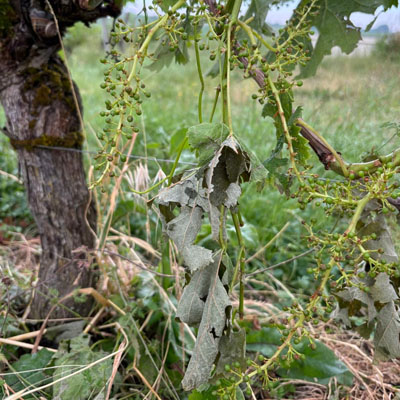
Leaf damage can also come from weather or contact rather than pests or disease. These causes usually leave more irregular tearing, splitting, or bruising across the foliage, particularly after storms or periods of strong wind. New leaves are often affected most because their tissue is softer and less resistant to impact.

  • Hail can punch through leaves or leave bruised areas that later split and fall away. Damage is often scattered across exposed parts of the canopy.
  • Strong winds can tear leaves along their edges or veins, especially when foliage is repeatedly forced against nearby branches.
  • Branches rubbing together may damage leaves caught between them, creating localised holes or shredded sections in one part of the canopy.
  • Contact with fences, walls, or rooflines can wear through leaves where the tree is growing too close to surrounding structures.
  • Soft new growth may split during sudden weather changes before the leaves have fully toughened.
Holes in Tree Leaves: Pests, Disease or Weather Damage - Hail damaged tree leaves

Weather-related damage often appears after a clear event and does not continue once conditions settle. If fresh holes keep forming without further wind, hail, or contact, another cause is more likely to be active.

Signs the Damage Is Affecting More Than Appearance

A few damaged leaves rarely affect the tree as a whole, but repeated or widespread loss can reduce the canopy’s ability to support healthy growth. The concern increases when holes continue appearing across new foliage, large sections of leaf tissue are missing, or the canopy begins to look thinner than usual.

Damage may also be part of a larger issue when it appears alongside weak new growth, changes in leaf colour, branch tip dieback, or reduced leaf size. These combined changes suggest the tree is not simply carrying cosmetic damage but may be under ongoing stress from pests, disease, weather, or poor growing conditions. When the pattern keeps returning, a broader tree health assessment is more useful than treating individual leaves.

Holes in Tree Leaves: Pests, Disease or Weather Damage - Branch tip dieback

What to Do When Holes Keep Appearing

When fresh damage continues to show across new leaves, the focus should be on tracking the pattern rather than treating every hole immediately. Repeated leaf damage often provides more useful information than a single affected branch or one weather event. A measured approach helps avoid unnecessary pruning or spraying.

  • Check the underside of leaves and nearby new growth for active insects, eggs, webbing, or fresh feeding damage.
  • Note whether the holes are increasing after wet weather or appearing alongside dark spots and discolouration, which may suggest disease pressure.
  • Compare exposed and sheltered parts of the canopy to see whether wind, hail, or contact with nearby structures is influencing the pattern.
  • Avoid applying broad insect sprays without identifying the cause, as weather or disease damage will not improve and beneficial insects may be affected.
  • Arrange a tree health assessment if the damage keeps spreading, returns across seasons, or appears with thinning foliage, weak growth, or branch tip dieback.
Holes in Tree Leaves: Pests, Disease or Weather Damage - Freshly formed holes in tree leaf

Damaged leaves will not repair themselves, but healthy new growth can return once the active cause has passed or been addressed. The main concern is whether the pattern continues through later growth rather than how one group of leaves looks.

Concerned About Holes Appearing in Tree Leaves?

If holes keep appearing across new growth or the damage is spreading through the canopy, a closer assessment can help identify whether pests, disease, weather, or site conditions are involved. O’Brien’s Tree Care can inspect the foliage, surrounding growth, and wider tree condition before the issue progresses further. To arrange an onsite inspection, contact our team on 07 5497 3116 or email info@obrienstreecare.com.au.

FAQ: Holes in Tree Leaves

Chewing pests such as caterpillars, beetles, and sawfly larvae are common causes. The shape of the holes, where they appear, and whether fresh damage is still forming can help narrow down the source.

Yes. Some diseases begin as dark or discoloured spots before the damaged tissue dries and falls away. This can leave small rounded holes that resemble insect feeding.

No. Once leaf tissue is missing, the leaf will not repair itself. The more useful sign is whether healthy new leaves develop without the same pattern of damage.

A few damaged leaves usually do not need to be removed. Excessive pruning can place more pressure on the tree, particularly if the canopy is already under stress.

Yes. Hail can puncture softer leaves or bruise tissue that later breaks away. Damage is often scattered across the more exposed sections of the canopy.

Assessment is worthwhile when holes keep appearing, new growth is being affected, or the damage appears alongside thinning foliage, discolouration, weak growth, or branch tip dieback.