Lightning Damage to Trees: Can a Struck Tree Survive?

A severe storm can leave behind obvious tree damage, but lightning strikes often create a very different pattern from wind or falling branches. Fresh bark loss, long vertical cracks, exposed timber or sudden damage through one side of the canopy can all appear after a strike. In other cases, the tree may still look relatively normal once the storm has passed.

Lightning damage to trees can affect the trunk, branches, crown and root system, and the full extent of the damage is not always visible straight away. Some trees continue growing after a strike, while others begin showing canopy decline or branch dieback over the following days or weeks. Whether the tree can recover depends on where the damage occurred, how extensive it is and the condition of the tree before the storm.
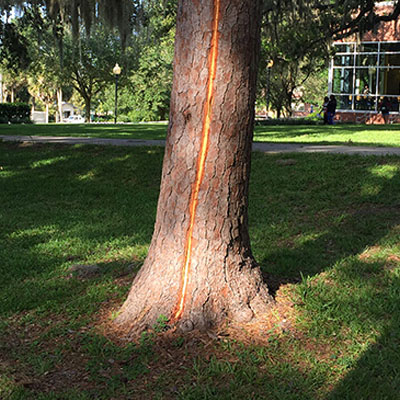
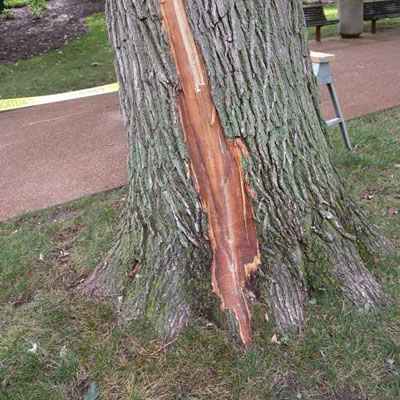
What Happens When Lightning Strikes a Tree

When lightning strikes a tree, the electrical current can travel through moisture in the trunk and branches towards the ground. The sudden heat created along that path can damage living tissue beneath the bark, split sections of the trunk or cause bark to blow away from the surface. In stronger strikes, the force can also damage major limbs or affect the area around the base of the tree.

A tree struck by lightning may show damage along one clear path, but the effects are not always limited to what can be seen externally. The current may travel through different parts of the tree and into the surrounding soil, which means roots and internal tissue can also be affected even when the trunk remains largely intact.

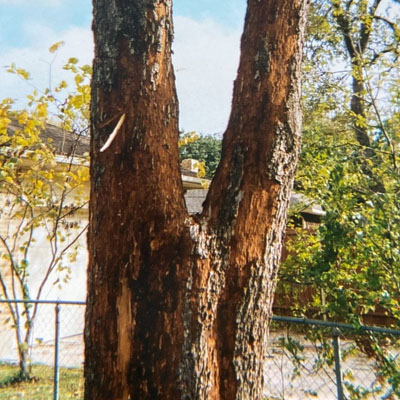
Lightning Damage to Trees - Visible lightning damage

Signs a Tree Has Been Struck by Lightning

Lightning damage can leave a distinctive path through a tree, but the signs are not always dramatic. Some strikes split bark and expose timber immediately, while others leave smaller wounds that become easier to notice once the storm has passed. Looking across the trunk, canopy and ground around the tree can help identify whether the damage is consistent with a lightning-struck tree.

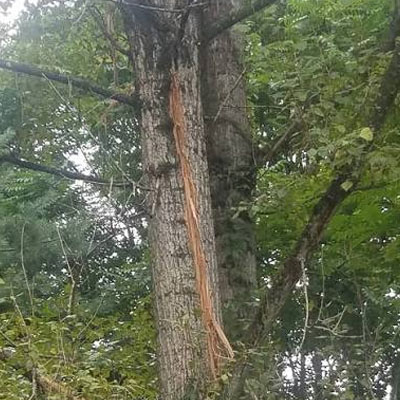
  • Long strips of bark missing from the trunk can appear where the electrical current travelled through the tree.
  • Fresh vertical cracks or splits may run along the trunk or larger branches.
  • Exposed or splintered timber can be visible where bark and outer tissue were forced away.
  • Broken or shattered branches may occur even when strong wind was not the main cause of the damage.
  • Scorched, wilted or suddenly browned foliage can appear in sections of the canopy affected by the strike.
  • Fresh bark or wood scattered around the base can indicate that sections were blown away during the event.
  • Damage concentrated along one side of the tree may trace the path the current took towards the ground.
Lightning Damage to Trees - Damaged tree

Not every strike produces all of these signs, and a tree can still be affected without dramatic bark loss or splitting. The condition of the canopy over the following days and weeks can provide additional clues about how much damage occurred.

Some Damage Appears Later

A tree can still look green and reasonably stable immediately after a lightning strike, even when the damage has affected internal tissue or roots. Over the following days or weeks, sections of the canopy may begin to thin, leaves can brown or wilt and individual branches may stop producing healthy growth. These delayed changes can make the full extent of the strike easier to judge than the appearance of the tree straight after the storm.

Later decline is more concerning when it continues to spread through the canopy rather than staying limited to one damaged area. Signs of lightning damage can include branch dieback, reduced new growth and foliage that gradually loses colour after the initial event. If these changes keep developing, the tree may need assessment to determine whether it is recovering or continuing to decline.

Lightning Damage to Trees - Damage appearing later

Damage That Needs Closer Attention

Some lightning damage is mainly cosmetic, but other signs suggest the strike has affected the tree’s structure or ability to recover. The concern increases when damage involves the main trunk, major limbs, root support or areas above homes, driveways and other frequently used parts of the property.

  • Deep trunk splits that extend through a large section of the tree rather than remaining superficial.
  • Large areas of bark or wood missing from the trunk, exposing deeper tissue.
  • Major limbs that have cracked or partially separated from the canopy.
  • Movement around the base of the tree or changes in the surrounding soil that suggest root instability.
  • Widespread canopy decline that continues to spread after the storm.
  • Damaged limbs above homes, paths or driveways where falling material could affect people or property.
  • Progressive deterioration where new symptoms continue appearing instead of the tree stabilising.
Lightning Damage to Trees - Damaged tree limb

These signs do not automatically mean the tree needs removal, but they do justify a closer assessment by a qualified arborist. The more the damage affects structural support or continues to worsen, the more important it becomes to decide whether pruning, monitoring or removal is the safest next step.

Pruning, Monitoring or Removal After a Lightning Strike

The right response depends on how much of the tree has been affected and whether the damage is still progressing. Some trees may only need selective tree pruning to remove broken or badly damaged limbs, while others can be monitored over time to see whether healthy growth returns. Where the trunk, major limbs or root system have been seriously compromised, tree removal may become the safer option.

A tree health assessment can help separate damage that the tree is likely to recover from and damage that has changed its long-term stability. This is especially useful when the tree still looks largely intact from the ground but continues to show canopy decline, fresh cracking or branch dieback after the storm. The aim is to avoid unnecessary removal while also recognising when the strike has caused damage that should not be left unmanaged.

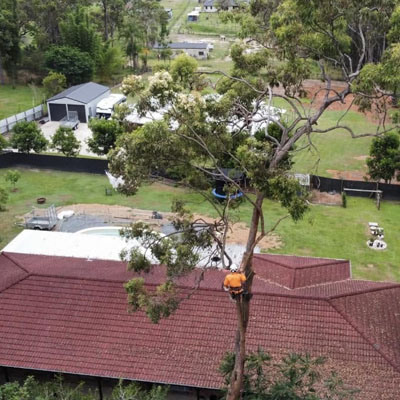
Lightning Damage to Trees - Preventative tree pruning

Concerned About Lightning Damage to a Tree?

If a tree has been struck by lightning or begins showing new damage after a severe storm, it is worth having the trunk, canopy and root area checked before the condition changes further. O’Brien’s Tree Care can assess the extent of the damage and advise whether pruning, monitoring or removal is the most suitable next step.

To arrange an onsite assessment, call 07 5497 3116 or contact us online.

FAQ

Yes, some trees recover after a lightning strike, particularly when healthy crown growth continues and the main trunk, major limbs and roots remain structurally sound. Recovery depends on the severity and location of the damage as well as the tree’s condition before the strike.

Common signs include long strips of missing bark, fresh vertical cracks, exposed timber, broken branches or bark scattered around the base. Some trees show less obvious damage, so changes in the canopy during the following days and weeks can also be significant.

Not necessarily. A tree may remain green after the storm and begin showing thinning foliage, branch dieback or reduced new growth later as damaged tissue and roots start affecting the canopy.

Yes. Electrical current can travel through the tree and into the surrounding ground, potentially affecting roots even when there is limited visible damage around the base. Root damage can affect the tree’s health and, in more serious cases, its stability.

Loose bark should not automatically be cut away or the wound altered without assessing the extent of the damage first. Unnecessary cutting can enlarge the affected area and create additional wounds around tissue that may still be viable.

Assessment is worthwhile when the tree has deep trunk splits, major broken limbs, widespread bark loss, movement around the base or continuing canopy decline. Trees positioned near homes, driveways, paths or outdoor areas should also be checked where damaged sections could affect people or property.