Tree Pruning for Roof and Gutter Clearance

Branches growing over a home can begin rubbing against roofing, resting on gutters or restricting access for cleaning and maintenance. Leaf and twig buildup may also become harder to manage when the canopy sits directly above the roofline. These problems often develop gradually as new growth closes the space between the tree and the building.

Tree pruning for roof clearance should create practical separation without cutting the canopy back harder than necessary. The work needs to account for branch structure, future growth and how limbs above the home will be secured and lowered without damaging roofing, gutters, solar panels or surrounding property. A planned approach protects the building while retaining healthy growth wherever possible.
When Branches Around the Roof Become a Problem

Branches do not need to be resting directly on the roof before they start causing trouble. Regular movement in wind can bring limbs into contact with gutters, fascia, roof edges or solar panels, while lower growth may make it harder to reach sections of the roof safely for cleaning and maintenance.

The issue often becomes more noticeable when tree branches over the roof begin dropping leaves, twigs or seed material into areas that are already difficult to access. Branches above driveways, entries or outdoor areas can also create clearance problems below the canopy, especially as new growth extends closer to the building.

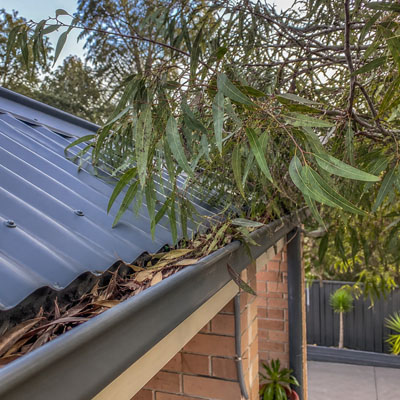
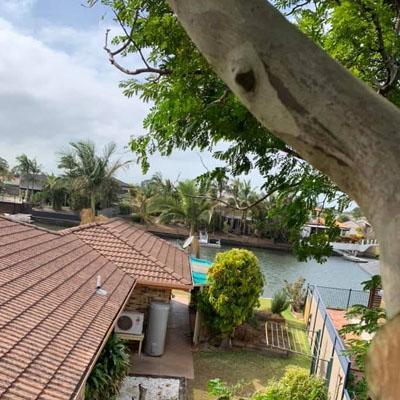
Tree Pruning for Roof and Gutter Clearance - Branches over roof

Signs Roof Clearance Pruning May Be Needed

Roof clearance pruning is usually needed when growth is beginning to interfere with the building, access or routine maintenance. The aim is to deal with the problem before branches start scraping surfaces, blocking roof areas or becoming harder to control above the home.

  • Branches touching the roof or moving against roofing, gutters or fascia during wind.
  • Trees overhanging gutters heavily enough to cause repeated leaf, twig or seed buildup.
  • Limbs extending across solar panels, chimneys or roof access points, making inspection and maintenance more difficult.
  • Dead or damaged branches above the building that may break or drop without much warning.
  • New growth quickly closing an existing clearance gap after earlier pruning.
  • Heavy limbs positioned over roofs, driveways or entry areas where controlled removal would be needed.

Overhang alone does not mean every branch above the roof should be removed. The position, condition and future growth of each limb need to be considered so suitable clearance can be created without unnecessarily reducing or unbalancing the canopy.

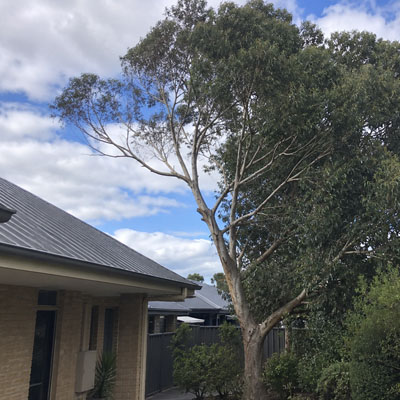
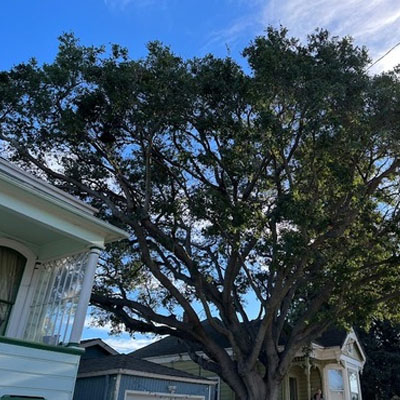
Tree Pruning for Roof and Gutter Clearance - Branch contact with roof

Clearance Pruning Is More Than Cutting Back Overhang

Creating roof clearance is not as simple as cutting branches back to the edge of the building. The position of each cut affects how the tree carries weight, where new growth develops and whether the remaining branch structure stays balanced. Poorly placed cuts can leave long stubs, exposed wounds or weak shoots that grow straight back towards the roof.

Good gutter clearance pruning works from suitable branch unions and removes only the growth needed to create usable space. This allows the canopy to retain more of its natural structure while reducing contact with roofing, gutters and nearby fixtures. For larger trees, professional tree pruning near the house also considers how the tree is likely to respond over the following seasons.

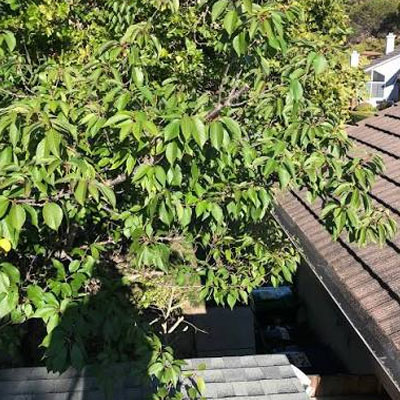
Tree Pruning for Roof and Gutter Clearance - Tree pruning

Why Cutting Back Too Hard Can Create New Problems

Heavy pruning on the side facing the home can leave the canopy uneven and place more weight on the opposite side of the tree. Removing too much healthy foliage also reduces the tree’s capacity to produce energy and can expose previously shaded branches and bark to stronger sun and heat.

Effective pruning of trees away from the roof should create usable clearance while retaining enough canopy to support the tree’s health and natural structure. A selective approach avoids leaving the tree visibly stripped on one side and reduces the need for corrective work caused by excessive canopy removal.

Tree Pruning for Roof and Gutter Clearance - Pruned tree near roof

What Good Roof and Gutter Clearance Should Achieve

Good clearance pruning should leave enough space for the roof and gutters to be accessed and maintained without stripping the tree back unnecessarily. The finished result should also account for future growth so the same problem does not return immediately.

The best roof clearance is practical without being excessive. It should protect the home, improve access and leave the tree in a condition that can be managed more easily over time.

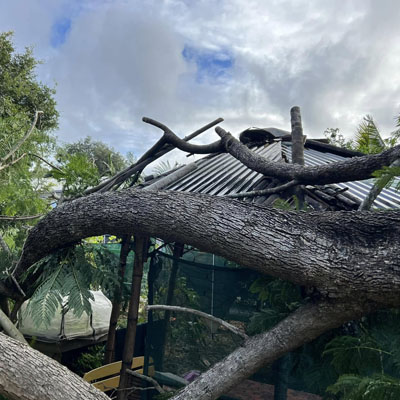
Tree Pruning for Roof and Gutter Clearance - Tree branches over greenhouse

Pruning Branches Over a Roof Requires Controlled Handling

Branches positioned above a home often cannot be cut and allowed to fall freely. Even a moderate limb can damage roofing, gutters, solar panels, windows or nearby structures if its weight and movement are not controlled. Once a cut begins, the branch may swing, twist or drop differently from how it appeared while still attached.

A qualified arborist can secure limbs with ropes, remove them in manageable sections and lower each piece into a clear area. This may involve climbing equipment, rigging systems and a ground crew controlling the load as it comes down. The right equipment and experience allow the required clearance to be created without placing the home or surrounding property at unnecessary risk.

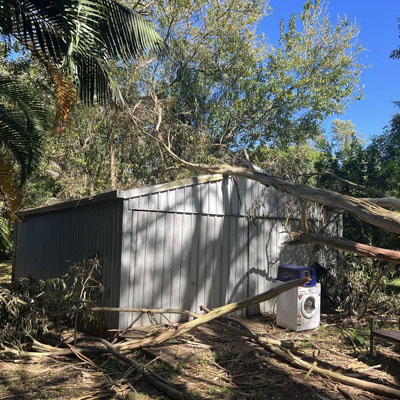
Tree Pruning for Roof and Gutter Clearance - Branches fallen on top of shed

When Roof Clearance Should Be Reviewed Again

Roof clearance does not stay the same as the tree continues to grow. Fast-growing species may close the gap sooner, while slower-growing trees may hold suitable clearance for several seasons. Storms, damaged branches or changes in canopy weight can also bring limbs closer to the roof before routine pruning would normally be due.

There is no fixed schedule that suits every tree. Clearance should be reviewed when new growth begins extending back over the building, branches start moving against roof areas again or maintenance access becomes restricted. Checking the space periodically allows pruning to be planned before the issue returns to direct contact with the home.

Tree Pruning for Roof and Gutter Clearance - Ensure periodical clearance checks

Need Tree Pruning Around Your Roof or Gutters?

Branches growing over roofing, gutters or solar panels need to be pruned with the building and the tree in mind. O’Brien’s Tree Care can assess the required clearance, secure and lower limbs safely, then complete the work without cutting the canopy back harder than necessary. To arrange professional tree pruning, contact our team on 07 5497 3116 or email info@obrienstreecare.com.au.

FAQ: Pruning Branches for Gutter Clearance

Some overhang may be manageable, but branches should not rest on roofing, gutters, solar panels or other fixtures. Clearance becomes more important when limbs are heavy, damaged or moving against the building during wind.

Yes. Repeated contact can affect gutters, fascia, roofing materials and nearby fixtures. Even light branches can create wear over time if they continue moving against the same area.

Pruning can reduce the amount of foliage directly above the gutters, but it will not stop all leaf or seed buildup. Regular gutter cleaning may still be needed, particularly where large trees grow close to the home.

There is no single clearance distance that suits every tree or property. The required space depends on the branch size, growth rate, roof design and how much movement occurs during wind.

Small ground-level growth may be manageable, but branches above a roof should be handled carefully. Heavy limbs may need to be secured and lowered in sections by a qualified arborist to prevent damage to the home.

The timing depends on the tree’s growth rate and how quickly branches begin closing the gap again. Clearance should be reviewed when branches start approaching the roof, restricting access or moving against the building.