Over-Pruned Trees: Can They Recover?

A tree can look dramatically different after heavy pruning, especially when a large amount of healthy canopy has been removed at once. The crown may appear thin or uneven, previously shaded branches can suddenly be exposed and the tree may respond with a rush of fast new shoots. That does not always mean the damage is permanent, but it does show the tree is reacting to a major change.

An over-pruned tree can recover if enough healthy structure remains and the tree is given time to rebuild its canopy. Recovery depends on how much live growth was removed, where the cuts were made, the tree’s condition before pruning and whether it is placed under further stress afterwards. The next step is working out whether the pruning was simply heavy or whether it has created longer-term problems.
What Counts as Over-Pruning?

Over-pruning happens when too much live canopy is removed at once or when cuts are made without enough consideration for the tree’s structure and future growth. This can include excessive crown thinning, stripping one side of the canopy, repeatedly cutting the same tree back hard or removing large healthy branches that were still contributing to the tree’s strength and energy production.

The problem is not simply the number of branches removed, but how much functional canopy is lost and where that loss occurs. Poor tree pruning can leave the crown uneven, expose previously shaded limbs and create large wound sites that take time to respond to. A tree that has been cut back heavily several times may also have less capacity to recover than one experiencing a single episode of excessive pruning.

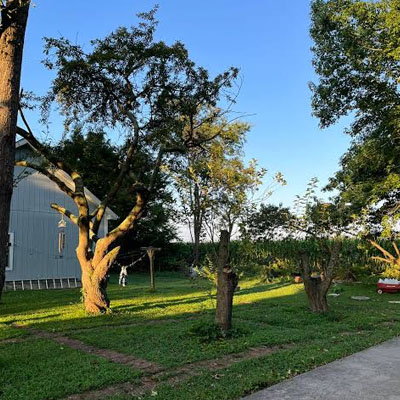
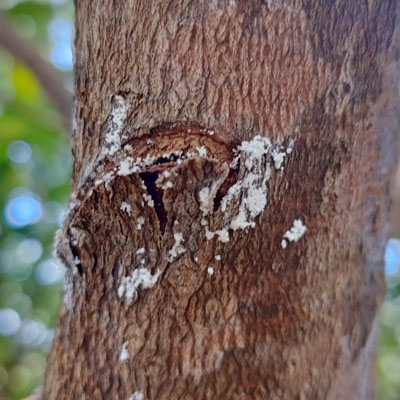
Over-Pruned Trees - No regrowth after over-pruning

Signs a Tree Has Been Pruned Too Hard

The effects of excessive pruning are usually easiest to see in the canopy and the tree’s response afterwards. Some changes appear immediately, while others develop over the following weeks or months as the tree tries to replace lost foliage.

  • A sudden drop in canopy density can leave the tree looking sparse, uneven or stripped back compared with its previous shape.
  • Fast upright shoots may appear from large limbs or near old pruning cuts as the tree tries to replace lost growth quickly.
  • Previously shaded branches or trunk sections become exposed, increasing the chance of sun damage during hot conditions.
  • New growth forms in crowded clusters rather than developing as well-spaced structural branches.
  • One side of the canopy carries noticeably less foliage, particularly where clearance work or heavy cutting has been concentrated in one area.
  • Branch dieback may begin appearing if the tree struggles to support remaining growth after heavy pruning.
  • Overall vigour declines, with smaller leaves, weak new growth or slower canopy recovery over time.
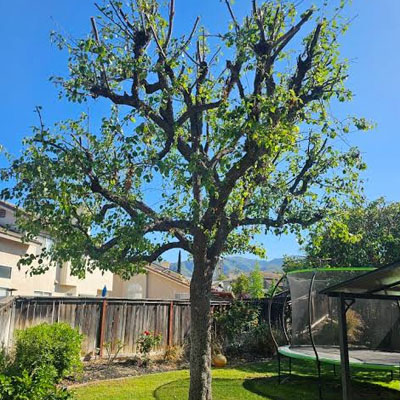
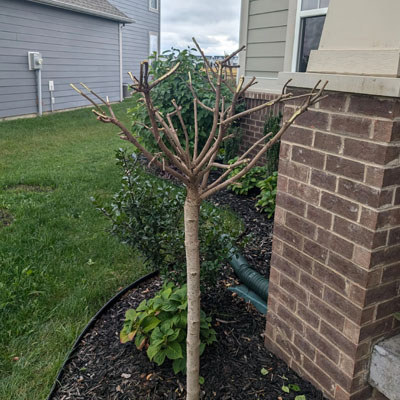
Over-Pruned Trees - Tree pruned too hard

These signs are more concerning when several appear together or continue across more than one growing period. Rapid regrowth alone does not necessarily mean the tree has recovered well, especially if those new shoots are weakly attached or poorly positioned.

Why Heavy Pruning Can Stress a Tree

Heavy pruning removes a large amount of active foliage, reducing the tree’s ability to produce the energy needed for growth, root function and recovery. It can also expose branches and trunk sections that were previously shaded by the canopy, increasing their exposure to heat and sun. Large pruning cuts add further stress because the tree has more wound area to manage at the same time.

The structural effect can be just as important as the loss of foliage. Removing too much growth from one part of the canopy can change how weight is distributed through the remaining limbs and leave the tree more exposed to wind. Excessive tree pruning can also trigger rapid replacement growth, but that response does not always restore the strength or structure that was lost.

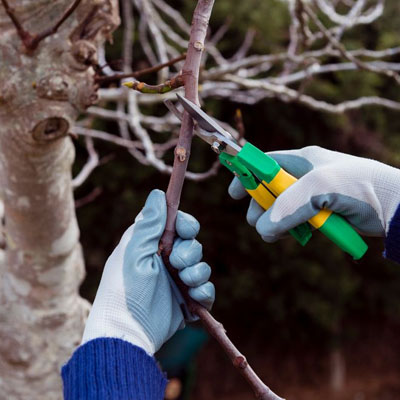
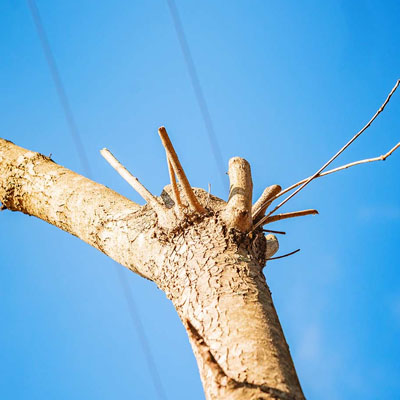
Over-Pruned Trees - Tree pruning

Can an Over-Pruned Tree Recover?

Yes, some trees can recover from heavy pruning, especially when enough healthy canopy and structural growth remain. Recovery is more likely when the tree was in good condition beforehand, major limbs were not badly damaged and the root system is still functioning well. Suitable soil moisture and avoiding further aggressive cutting also give the tree a better chance to rebuild foliage gradually.

The harder cases are trees that were already stressed or have been repeatedly cut back over several seasons. If large structural limbs have been removed, the canopy is badly unbalanced or new growth remains weak, recovery may take much longer and may never fully restore the tree’s previous form. A tree health assessment can help determine whether the tree is rebuilding normally or whether the damage is creating longer-term problems.

Over-Pruned Trees - Tree regrowth

Fast Regrowth Does Not Always Mean Healthy Recovery

A heavily pruned tree can respond by producing large numbers of fast-growing shoots from old cuts, major limbs or along the trunk. This can make the canopy look like it is recovering quickly, but the new growth is often different from the branches that were removed. Shoots may develop in crowded clusters, grow rapidly and attach more weakly than established structural limbs.

This kind of weak regrowth after pruning can create another management problem later if it is allowed to become dense or overextended. The tree may need careful follow-up pruning over time to improve spacing and reduce poorly attached shoots without removing too much fresh foliage again. The goal is controlled recovery, not another round of heavy cutting.

Over-Pruned Trees - Fast regrowth after pruning

What to Do After a Tree Has Been Over-Pruned

The best response after excessive pruning is usually to avoid making further major cuts straight away. The tree needs time to rebuild foliage and stabilise its growth, so the focus should be on supporting recovery rather than trying to reshape the canopy immediately.

  • Avoid another heavy prune while the tree is still replacing lost foliage.
  • Monitor new shoots to see which ones are developing strongly and which remain crowded or weakly attached.
  • Maintain suitable soil moisture without overwatering, particularly during hot or dry conditions.
  • Avoid unnecessary fertiliser unless there is a confirmed reason to use it.
  • Watch for branch dieback, bark damage or poor leaf growth that may indicate the tree is struggling rather than recovering.
  • Arrange a tree health assessment if the canopy remains weak, regrowth is poor or decline continues through the next growing period.
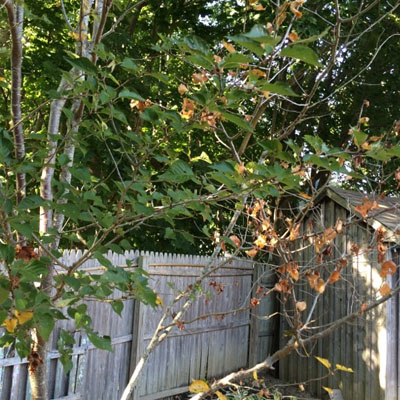
Over-Pruned Trees - Branch dieback

Recovery can take time, especially after severe damage caused by improper tree pruning. The aim is to let the tree rebuild enough healthy growth before any corrective work is considered, then manage the new canopy gradually rather than repeating the same aggressive approach.

When Damage May Be Harder to Correct

Some pruning damage becomes harder to manage when the tree has been cut back heavily more than once or when large structural branches have already been removed. Repeated hard pruning can leave the canopy dependent on weak replacement growth, while large old cuts may begin developing decay or poor attachment around the surrounding wood. In these situations, the tree may never return to its previous form even if it continues producing foliage.

The concern increases when the canopy remains badly unbalanced, new growth stays weak or branch dieback continues across more than one growing period. A tree may still be able to remain in place, but it can require ongoing management rather than a one-off corrective prune. Where structural defects or decline are becoming more serious, a qualified arborist can assess whether continued pruning is practical or whether another management option should be considered.

Over-Pruned Trees - Damage to tree after over-pruning

Concerned About an Over-Pruned Tree?

If a tree has been cut back heavily and the canopy is struggling to recover, O’Brien’s Tree Care can assess the new growth, remaining structure and overall condition of the tree. Our arborists can advise whether the tree needs time to recover, selective follow-up pruning or a broader tree health assessment.

To arrange an onsite assessment, call 07 5497 3116 or contact us online.

FAQ: Over-Pruned Trees

Yes, some trees can recover after heavy pruning if enough healthy canopy and structure remain. Recovery depends on the tree’s condition before pruning, how much live growth was removed and whether it is given time to rebuild without further aggressive cutting.

There is no fixed recovery period because species, age, growing conditions and the severity of the pruning all affect the response. Some trees produce new shoots quickly, while rebuilding a balanced canopy can take several growing seasons.

Rapid shoot growth is a common response when a large amount of foliage has been removed. The tree is trying to replace lost canopy, but these shoots can be crowded and weakly attached, so fast regrowth does not always mean healthy recovery.

Not immediately. Removing large amounts of new growth too soon can place the tree under further stress. Follow-up tree pruning is usually better approached gradually once the tree has had time to recover and the stronger shoots can be identified.

Severe or repeated over-pruning can contribute to decline, particularly when the tree is already stressed, damaged or in poor growing conditions. Excessive canopy removal can reduce energy production, expose branches to heat and leave the tree struggling to replace lost growth.

A tree health assessment is worthwhile when the canopy remains sparse, new growth is weak, branch dieback continues or the tree shows little improvement through its next active growing period. Assessment can help determine whether the tree is recovering normally or needs further management.